
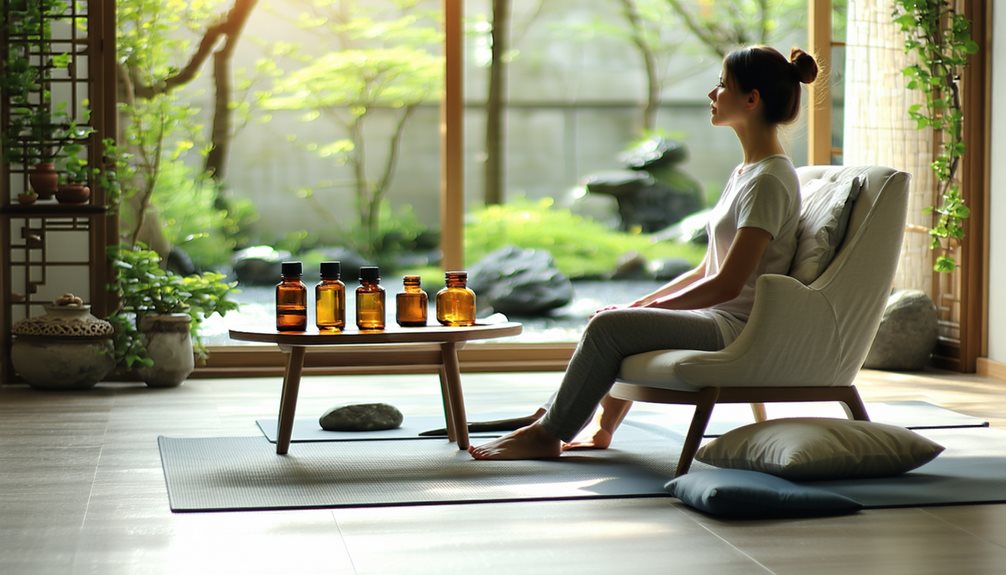
Leading clinics employ a range of anxiety-reducing techniques tailored to patient needs. Sedation dentistry options, such as nitrous oxide and IV sedation, optimize comfort during procedures. Cognitive behavioral strategies and mindfulness practices empower patients by altering negative thought patterns and enhancing emotional regulation. Virtual reality experiences and calming office environments reduce sensory stress. Personalized patient care integrates advanced technologies and unique patient profiles for bespoke anxiety management. Techniques like breathing exercises and progressive muscle relaxation offer accessible and effective stress relief. These clinics blend innovative and holistic approaches, ensuring thorough anxiety reduction strategies are well within reach.
Sedation Dentistry Options
Maneuvering through dental anxiety can be challenging, but sedation dentistry offers a range of options to ease the experience for patients. This innovative approach involves various sedation methods tailored to meet individual needs, providing effective anxiety relief.
Nitrous oxide, commonly known as "laughing gas," is a mild form of sedation that allows patients to remain conscious yet relaxed. Its rapid onset and recovery make it a preferred choice for those with minimal anxiety.
For more pronounced dental phobias, oral sedation presents a viable solution. This method involves administering medication prior to the procedure, inducing a state of deep relaxation without rendering the patient unconscious. Evidence suggests that oral sedation considerably enhances patient comfort and reduces perceived stress levels during dental visits.
Intravenous (IV) sedation, another advanced method, provides a deeper level of sedation and is typically employed for complex procedures or extreme anxiety cases. Administered by trained professionals, IV sedation offers precise control over sedation levels, ensuring both safety and efficacy.
While these sedation methods vary in intensity and application, they collectively represent a progressive shift towards patient-centered care, prioritizing anxiety relief and comfort. By integrating such innovative practices, clinics can transform the dental experience, making it more accessible and less intimidating for anxious patients.
Cognitive Behavioral Strategies
Addressing dental anxiety through cognitive behavioral strategies offers an evidence-based approach that empowers patients to manage their fears effectively. These strategies focus on altering maladaptive thought patterns and behaviors that contribute to anxiety, thereby promoting a sense of control and resilience.
Cognitive restructuring plays a pivotal role by helping patients identify and challenge irrational beliefs about dental procedures. By restructuring these thoughts, patients can replace fear-inducing beliefs with more realistic and constructive perspectives, consequently reducing anxiety levels.
In addition to cognitive restructuring, exposure therapy is a critical component of these strategies. This therapeutic technique involves gradual, controlled exposure to anxiety-provoking stimuli, such as dental tools or the clinical environment, in a safe and supportive setting.
By systematically desensitizing patients to these triggers, exposure therapy diminishes the fear response over time, enabling patients to face dental appointments with increased confidence.
The integration of cognitive behavioral strategies within dental clinics represents a forward-thinking approach to anxiety reduction. By leveraging these techniques, practitioners can offer patients a non-pharmacological option that not only addresses the immediate symptoms of anxiety but also fosters long-term coping mechanisms, ultimately enhancing patient outcomes and satisfaction.
Virtual Reality Experiences
Virtual reality’s innovative application within dental care settings offers a compelling avenue for anxiety reduction. This cutting-edge approach, known as virtual reality therapy, provides patients with immersive experiences that can greatly alleviate the stress associated with dental procedures. By immersing patients in a virtual environment, this technology diverts attention from the clinical setting, helping them to engage with the treatment in a more relaxed manner.
Evidence suggests that virtual reality therapy effectively reduces perceived pain and anxiety levels. In a study published in the Journal of Medical Internet Research, participants using virtual reality during dental treatments reported lower anxiety and discomfort compared to those receiving standard care. The immersive experiences created by virtual reality are designed to reduce sensory input from the actual dental environment, offering a distraction that can be customized to suit individual preferences.
Analytically, the adoption of virtual reality in clinical settings underscores a broader trend toward patient-centered care, emphasizing comfort and emotional well-being. Clinics utilizing this technology are at the forefront of integrating digital solutions to enhance patient experiences.
As virtual reality continues to evolve, its applications in healthcare could expand, offering further innovations in anxiety management across various medical disciplines.
Calming Office Environments
While virtual reality offers a high-tech solution to anxiety reduction, the design of the physical environment within dental and medical offices also plays a vital role in alleviating patient stress.
Empirical studies demonstrate that thoughtfully curated environments can markedly diminish anxiety levels, thereby enhancing patient experience and compliance. An essential element of such design is the strategic use of soothing colors. Soft hues such as blues, greens, and pastels are shown to lower heart rates and induce feelings of calmness. These colors are effective in creating a serene atmosphere that can mitigate the anticipatory anxiety patients often experience.
In addition to visual aesthetics, incorporating tranquil sounds into office spaces is a key technique. Research suggests that soundscapes featuring natural elements, like gentle water flows or rustling leaves, promote relaxation and mental well-being.
Leading clinics are increasingly adopting these innovative design principles, recognizing that a calming office environment not only enhances patient comfort but also positively impacts clinical outcomes.
Personalized Patient Care
Tailoring care to the individual needs of patients is increasingly recognized as a cornerstone of effective anxiety reduction. Leading clinics are progressively adopting personalized care models that emphasize individualized treatment to enhance patient engagement. Research indicates that bespoke approaches in anxiety management not only build stronger therapeutic alliances but also greatly improve treatment outcomes.
By focusing on the unique psychological, physiological, and social dimensions of each patient, personalized care enables clinicians to design interventions that resonate more deeply with the patient’s experiences and expectations.
Incorporating patient engagement as a fundamental component, clinics are utilizing advanced technologies and data analytics to better understand patient profiles and predict treatment responses. Such innovations facilitate a dynamic, feedback-driven adaptation of therapeutic strategies, thereby fostering a more responsive and inclusive care environment.
Individualized treatment plans are crafted based on thorough assessments, incorporating patient preferences and leveraging evidence-based methodologies tailored to the specific anxiety triggers and coping mechanisms of each patient.
As the healthcare landscape evolves, the shift towards personalized patient care promises to redefine anxiety management by enhancing the precision and effectiveness of interventions. Embracing this patient-centric paradigm not only aligns with modern healthcare practices but also holds the potential to greatly advance the field of anxiety reduction.
Mindfulness and Relaxation Techniques
The implementation of mindfulness and relaxation techniques such as breathing exercises, guided meditation, and progressive muscle relaxation has been shown to greatly alleviate anxiety symptoms.
Empirical evidence suggests that these practices enhance emotional regulation, reduce stress responses, and promote a sense of calmness.
Breathing Exercises Benefits
Frequently overlooked yet profoundly impactful, breathing exercises stand as a cornerstone in the arsenal of anxiety-reducing techniques, offering considerable benefits rooted in mindfulness and relaxation. These exercises, ranging from diaphragmatic breathing to the 4-7-8 technique, are designed to engage the parasympathetic nervous system, thereby promoting stress relief.
Research underscores that controlled breathing techniques can notably decrease cortisol levels, the hormone associated with stress, consequently enabling individuals to achieve a state of calmness and enhanced mental clarity.
In clinical settings, the efficacy of breathing exercises in managing anxiety has been well-documented. For instance, a study published in Health Psychology Review highlights that participants practicing regular breathing techniques reported a marked reduction in anxiety symptoms compared to those who did not.
These findings illuminate the potential of such techniques to serve as non-pharmacological interventions, particularly appealing to those seeking innovative, holistic approaches to mental health.
Moreover, the adaptability of breathing exercises—requiring no equipment and minimal time commitment—renders them a practical, accessible tool for daily stress management.
As leading clinics continue to integrate these techniques into treatment protocols, the potential for breathing exercises to transform anxiety management paradigms becomes increasingly apparent.
Guided Meditation Practices
Building on the foundational role of breathing exercises in anxiety management, guided meditation practices further enhance mindfulness and relaxation techniques. As evidenced by numerous studies, guided meditation is a potent tool in reducing anxiety by fostering a state of focused relaxation.
Clinicians often utilize guided imagery, a technique that involves the visualization of calming and serene environments. This method aids individuals in redirecting their thoughts away from stressors, thereby cultivating a sense of peace and tranquility.
Another prominent technique in guided meditation is the body scan, which encourages individuals to mentally evaluate different parts of their body to detect tension areas. By fostering awareness of bodily sensations, the body scan not only promotes relaxation but also enhances the mind-body connection, which is vital in managing anxiety symptoms effectively.
The integration of these practices into clinical settings exemplifies innovation in therapeutic approaches, offering patients a structured yet adaptable method to alleviate anxiety. Leading clinics have adopted these evidence-based practices, acknowledging their role in promoting mental well-being.
As research in the field continues, guided meditation practices are poised to become even more refined, offering innovative solutions for those seeking to manage anxiety with precision and effectiveness.
Progressive Muscle Relaxation
Progressive Muscle Relaxation (PMR) serves as a cornerstone technique within the spectrum of mindfulness and relaxation strategies aimed at mitigating anxiety. By systematically tensing and releasing specific muscle groups, PMR facilitates a reduction in muscle tension, which is often a physical manifestation of anxiety. This technique is underpinned by the concept that the relaxation response, an innate physiological reaction, can be activated through structured muscle engagement and release.
Empirical studies suggest PMR can markedly diminish anxiety symptoms, offering a non-pharmacological avenue for managing stress.
To effectively implement PMR, individuals typically adhere to a structured protocol:
-
Select a Quiet Environment****: Initiating PMR in a tranquil setting enhances concentration and supports the relaxation response.
-
Sequential Muscle Engagement: Progress through muscle groups, from head to toe, tensing each for 5-10 seconds before releasing. This deliberate process aids in distinguishing between tension and relaxation.
-
Consistent Practice: Regular practice is essential for fostering a profound relaxation response and reducing muscle tension over time.
Clinicians advocate for PMR due to its simplicity, accessibility, and ability to empower individuals by providing a tangible tool to combat anxiety.
As research evolves, PMR continues to gain traction, reinforcing its role as an innovative technique in anxiety management.
Frequently Asked Questions
How Can Diet Affect Anxiety Levels?
Diet greatly influences anxiety levels through nutrient deficiencies and gut health. Deficiencies in essential nutrients can exacerbate anxiety symptoms, while a healthy gut microbiome, supported by a balanced diet, can improve mental well-being and reduce anxiety.
Are There Any Natural Supplements Recommended for Anxiety Relief?
Natural supplements, such as herbal remedies like valerian root and theanine, are often recommended for anxiety relief. Magnesium benefits include improved mood regulation and stress reduction, supported by emerging research, appealing to those seeking innovative and evidence-based solutions.
What Role Does Exercise Play in Managing Anxiety?
Exercise, specifically mindful movement and aerobic activities, plays a vital role in managing anxiety by enhancing endorphin release, improving mood, and promoting relaxation. Empirical evidence supports its efficacy, fostering innovative approaches in integrative mental health strategies.
How Does Sleep Quality Influence Anxiety Symptoms?
Sleep quality greatly influences anxiety symptoms, with poor sleep hygiene exacerbating stress levels. Effective stress management protocols often prioritize sleep hygiene, recognizing its critical role in reducing anxiety through improved cognitive function and emotional resilience.
Can Social Support Systems Help Reduce Anxiety?
Peer support and strong emotional bonds are pivotal in reducing anxiety. Evidence suggests that individuals engaged in supportive social networks experience lower anxiety levels due to shared experiences, enhanced coping mechanisms, and increased resilience against stressors.
Conclusion
The integration of diverse anxiety-reducing techniques at leading clinics demonstrates a multifaceted approach to patient care. Sedation dentistry, cognitive behavioral strategies, and virtual reality experiences provide targeted interventions that directly address anxiety symptoms. Meanwhile, calming office environments and personalized patient care foster a supportive atmosphere conducive to relaxation. Mindfulness and relaxation techniques further enhance these efforts by promoting self-regulation. Collectively, these strategies underscore a commitment to evidence-based practices, aiming to improve patient experiences and outcomes in clinical settings.

